19 August, 2010
Senorita, Margarita?
 16:51 |
  Posted by
W
Posted by
W
There are some people who "can't do tequila" a statement often accompanied by a horror story involving an "insane night" where things went "so wrong so fast"; I am not one of those people. I would go so far as to say I like tequila. It's a versatile liquor; you can spring for expensive tequila like Patron or 1800 to sip or grab a mid-range Tequila which will prove a flavorful addition to a number of tequila based mixed drinks. But lets just be honest here.. there is only one tequila mixed drink, the Margarita, because there doesn't need to be anything else (okay so maybe that's not true, there are other tequila based drinks, but this blog entry isn't about them and there's a reason for that).


The International Bartender's Association lists a margarita as a 7:4:3 ratio of tequila, triple sec, and lime juice, but a more common ratio is 2:1:1.
Often the lime juice is replaced by sour mix which is a mix of lime juice and sugar which, in my opinion, is never a good idea. Sour mix is cheaper and often on a bar tap where as squeezing limes by hand might just be a little too time consuming for some places.The margarita, in its purest form is an elongated tequila shot. As anyone who's ever been to Mexico or college can tell you, a shot of tequila is normally accompanied by two things, a lime and salt.
This tradition came from Mexicans using salt and citrus juice to dilute the after burn of the tequila.By adding sugar and mixing the lime juice into the tequila the margarita became the modern man's sip-able tequila shot.
Now where the margarita comes from is a bit of a mystery; most stories concur that a bartender (somewhere in Mexico) was inspired by an actress or otherwise beautiful woman and thus created this cocktail in her honor, sometime in the early to mid twentieth century. One story even suggests that the cocktail was invented in Galveston, Texas (which is upsetting on several levels). Though the romanticism of it all is appreciated I would venture to say that there is no real story of the invention of such a cocktail. Much like inventing the sandwich or buttered bread rolls; how can one claim responsibility for a combination so natural?
Margaritas come in all shapes, colors, and sizes. There are the traditional lime margaritas, which come frozen, on the rocks, or straight up (without ice at all). Flavored margaritas are also offered at many places and usually are the product of frozen fruit being added to the margarita when blended with ice. In places like Texas there have been many deviations in the margarita front, due to the large number of Mexican restaurants all hoping to offer something unique. Here are a few of my favorites:The Margatini (Orlando's)
- 2 parts tequilla
- 1 part amaretto
- 1 part olive juice
- 1 part sweetened lime juice
- touch of vermouth
- olives
Served shaken from a martini shaker into a martini glass with salt on the rim.
The DosaRita (Ruby Tequila's)
- A traditional frozen margarita with a DosXX's beer turned upside down in the glass.
The Pineapple Infusion Margarita
- 2 parts pineapple infused tequila (where pineapple has been left in the tequila for an amount of time)
- 1 part grandmanier
- piece of vanilla bean
Served on the rocks with salt (or sugar) on the rim.
The Purist Margarita
- 2 parts 1800 tequila
- 1 part fresh lime juice
- 1 part Grand Marnier
- lime wedges squeezed and left in the glass
Served on the rocks with a salted rim, on the beach, with a smile.
 Labels:


03 August, 2010
Name that cookie...
Bored in the bakery and started a new trend of decorating; name that cookie!!
Because sometimes spinning on the big wheeled drums of powdered sugar gets old.

05 July, 2010
Figs

When I was about 12 my neighbor across the street, had a fig tree. She was a good friend of mine, Ms.Bowles, and was, at 97, my oldest friend. I would spend hours at her house just talking with her, and I suppose was lucky that she had the patience to spend her retired life entertaining the rambling of a lonely neighborhood girl. But we, dear people are getting off topic. Ms. Bowles had a fig tree and was ironically allergic to figs, and thus would encourage others to take the fruit. I stole a few, trying to eat one raw and then microwaving one with milk, I was left underwhelmed. The fruit was gritty with an odd skin, the flavor was sweet but just mildly so.. To summarize, this was no apple.

Fast forward a decade or so and I find myself faced with black mission figs in my local market... This was one fruit I needed to tackle. The mission fig is a type of fig introduced to the western United States by Franciscan monks and thus were granted their pious name. The mission figs differ from common figs in that they have smaller seeds, grow faster and to a greater size when matured. These figs sport a thin black skin and red flesh; they are fiercely sweet and can be purchased fresh in the summer or dry year round.
I purchased a clam-shell pack of fresh black mission figs at my grocery store for $4.99. Since figs are native to the Mediterranean I thought that a simple filo (phyllo) free-form crostata would pair nicely; in very much the same vein as my cherry crostata. This time instead of marzipan I used goat's cheese, and honey as the glue to keep the fruit down. Slicing the mission figs thinly to top the goat's cheese covered filo crust they were then generously drizzled with honey and baked until the figs became soft and the honey began to bubble. Lovely and light, the figs were perfect and the sour flavor of the goat's cheese helped balance the super sweet combination of figs and honey.
Mediterranean Mission Crostata
- 4 black mission figs, washed and thinly sliced vertically
- 4 oz of soft goat's cheese
Soft is important as it must be spread on top of the filo. If you're working with a drier goats cheese mixing it with honey or cream cheese could help the cheese become more spreadable. You want a good layer of cheese.
- 1/4 pack of filo sheets, layered with butter
- 3 tbsp honey
- 1 tsp salt
After layering the filo with butter on a greased or papered baking sheet place to the side. Mash your goat's cheese (or mixture of goat's cheese and honey) together in a bowl slightly warming the mixture to a spreadable consistency. Spread the goat's cheese mixture on top of the filo, careful to not tear the sheets. Apply a generous layer of the cheese and fold the edges of the filo up so that the cheese does not run off when melting. Wash and slice your figs thinly, careful to maintain their shape.
Slice using a very sharp knife vertically, keeping the tear-drop shape. This just makes a prettier tart, so don't worry too much.Layer the fig slices in any desired order on top of the goat's cheese. Sprinkle salt onto the top of the figs to bring out their flavor. Drizzle honey generously over the top and place in a pre-heated oven at 350 degrees. Bake until the honey begins to bubble on top of the figs and the filo begins to brown. Allow to cool at top with more honey when serving.

05 June, 2010
Cherries
 Cherries are one of my favorite summer fruits, second, perhaps, only to July peaches. When they're good, they're amazing, but they are also capable of being flavorless and too soft. These cherries I bought at Market street, and I realize that as it's only the beginning of summer I'm running the risk of wasting $9 on cherries that were awful, but I took my chances.
Now I've never cooked with fresh cherries; they rarely survive the car ride home, but as these were not of the huge black variety I was able to contain myself and give it a shot. I was determined not to distract from the cherries themselves so I kept it simple and lovely.
Cherry-Almond Filo Crostata
- 1lb cherries pitted and halved
- 1 tsp almond extract
- 1 tube marzipan
- 1/2 a package of filo
- 1/3 cup butter
- sweetener to taste
- pinch of salt
Keep the marzipan cold, if it melts it will become sticky and impossible to work with!
Finish layering the filo until you have the desired thickness. Roll out the chilled marzipan to approximate size and shape of filo and press onto filo. Mix cherries with almond extract, sweetener, and salt. Press cherries into marzipan, fold up sides of filo and bake at 350 until golden.
01 May, 2010
Bread
My relationship with bread has been a complex one. As a child I thought of bread as sort of the middle man to good things; burgers and cheese needed something to separate them! In my adolescence, when I became a vegetarian it was more of a staple; I was what one might call a potato and cheese vegetarian. Then I discovered baguettes, coupled with roasted garlic, olive oil, fruit and cheese. Oh goodness, the flood gates opened, not all bread was processed and in the shape of a square, there was this lovely flakey business also used as bread that tasted of awesome. So there my love affair with bread started, right at that moment, write it down everyone because this is important.
 Then, like in any relationship, bread and I hit a rough spot; ranging from dietary avoidance to indifference. Living in Spain we ate bread at every meal, and to be honest, I couldn't wait to get away from the dense bolillo bread present at every Spanish lunch and dinner. But as of now I'm in a good place; I don't believe that bread should be wasted as a middle man and no good bread comes in the shape of a rectangle. So if you're going to use it to make a sandwich, make a good one.
"The Good One"
- 1 french baguette
- marinated sliced mushrooms
- brie
- raspberry jam
- 2 egg whites
- basil
Slice baguette at an angle to get long slices, make it as thin as possible. Sauté or grill mushrooms until warm. On one bread side spread brie, on the other the jam. In between the two add the mushrooms and smoosh. Dip both sides of the assembled sandwiches into beaten egg whites. Griddle on both sides until tops brown.

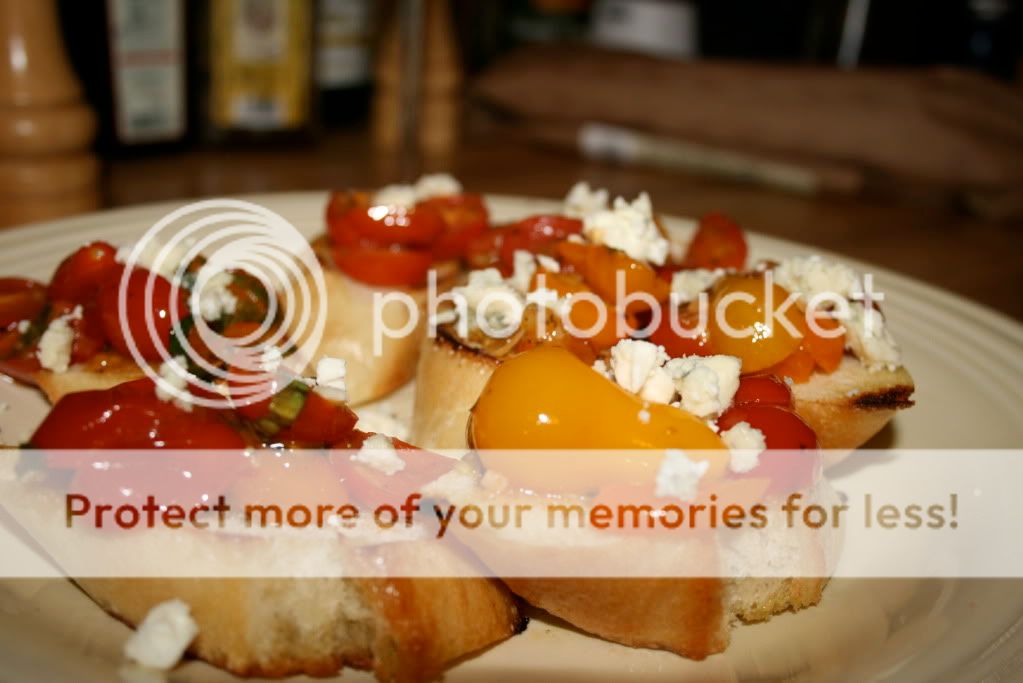
Or you could always highlight a lovely baguette by making bruschetta.
"WYSK's Bruschetta"
- organic cherry tomatoes
- 2 tbsp olive oil
- 2 cloves of garlic diced
- fresh basil
- oregano
- salt
- black pepper
- juice of 1/2 lemon
- baguette
Slice baguette to desired thickness. And toast in broiler or in frying pan until browned to your liking. Sauté oil, oregano, and diced garlic. Cut cherry tomatoes into halves or quarters, and add to the pan with lemon juice, salt, and pepper to taste. Only cook for 3-5 minutes, keeping the structure of the tomatoes. At the last second add shredded fresh basil, and spoon on top on toasts. Top with cheese if you like.
26 April, 2010
Orange Sponge Cake
We never say "sponge cake" anymore, well people I know don't. Every cake has to have a flavor, description, and plenty of thick icing; but what happened to simplicity? Perhaps we as Americans have lost our appreciation for this basic cake amongst the corn-syruped and chocolate dipped sweets that modern chemistry has afforded us, perhaps we have been over sugared?
Within England it's referred to as "sponge" and is common as a tea snack, a popular choice is Victoria Sponge, a sponge cake with jam layered in the middle. Sponge cake is at it's simplest a fluffy cake which can be eaten alone, or due to it's appropriate absorbency, is perfect accompanied with creme or fruit. The fluffiness of this cake comes from the presence of beaten egg whites within the batter; the cake maintains it's body despite the low proportion of flour by having less fats to soften its structure; this cake uses no yeast, and is one of the earliest non-yeasted cakes.Adapted from "Mastering the Art of French Cooking" I present: Gateau a l'Orange Procedure:
What you will need:
- Spring form pan or small greased 9 inch pan.
- whisk or electric beaters
- 2 mixing bowls
- a way to grate an orange
- 1/2 cup sugar
- 4 eggs separated
- zest of one orange
- juice of 3 oranges
- pinch-o-sal
- 3/4 cup flour
- 1 tbsp of extra sugar
 Procedure:
 Whisk 1/2 cup of sugar with eggs yolks until mixture thickens to a slow stream when falling from the whisk. Add zest, juice, and salt to the mixture and beat until foamy. Slowly beat in the flour to avoid lumps.
In a separate bowl whisk sugar, salt, and egg whites together until still peaks are formed.
This will take awhile and probably hurt your forearm.Fold the egg-white mixture into the batter one forth at a time using a wooden spoon or another flattened implement. Folding the delicate egg-whites into the heavier batter helps the egg-whites maintain their structure.
Folding is achieved by sweeping the bottom of the batter to the top slowly until mixture is incorporated.
Pour mixture into greased pan and bake at 350 for 20 minutes, but start checking at 15. The cake should be puffy and lightly browned.
The book says to cook for 30-35 minutes, mine baked for 18 and burned slightly. Perhaps my oven is too hot, but I would suggest vigilance.
Orange Butter Glaze
What you will need:
- whisk
- saucepan
- basin of cold water
Ingredients:
- 1/2 cup butter
- 1 1/2 cup sugar
- 2 eggs
- 2 egg yolks
- zest of one orange
- juice of 2 oranges
Beat all ingredients together in saucepan before heating. Once everything is incorporated heat on low or over a double boiler until mixture thickens to the consistency of honey. The mixture is at the optimum temperature when it is too hot for your finger tip.
Heating slowly prevents the eggs from scrambling.
Once temperature has been reached remove from heat and place the bottom of the saucepan in the basin of cold water. Continue to whisk for 4-5 minutes until the mixture thickens.
Cut the cake in half horizontally and pour glaze on the exposed part of both halves. Allow to set and reassemble. You can also take a small layer off of the top and pour the glaze over the top.

16 April, 2010
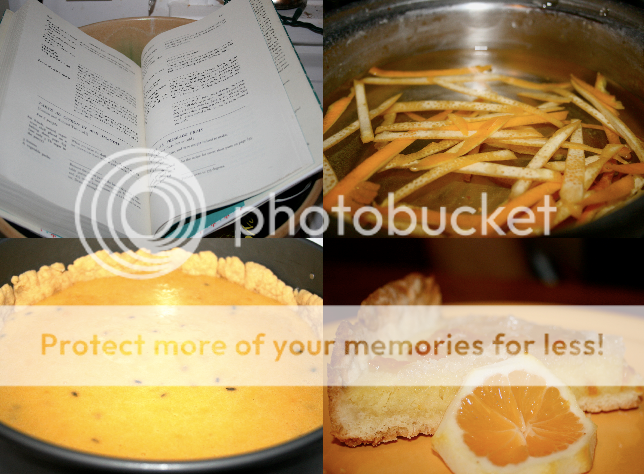
Tarte Au Citron et Aux Amandes (Lemon Almond Tart)
Naturalists argue that there is no choice; we all make decisions based on previous experiences culminated with the stimuli present at any given time. The human brain is essentially a function, input of stimulus goes through the function of previous experience and the output is action, which can be predetermined and is inescapable. One could suggest this is why most of the decisions we make on a daily basis pass without any notice at all; there really was no choice to begin with. Therefor I would suggest it is a rare moment when we are fully aware whilst making a decision of it's pros and cons and how the results will in turn be effected; today I had one of those moments.
I had planned to make a dessert from Julia Child's "Mastering the Art of French Cooking"; after consulting Alin, I had a plan to make the Tarte Au Citron et Aux Amandes. Now here is where the big choice comes in; to buy or not to buy the tart shell? Well.. I've made pie crust before and it's awful; I still haven't gotten around to buying/stealing a rolling pin and they always end up so ugly. So as I strolled the aisles of Market Street, I pictured the pre-made tart shells, I even knew exactly where they were, and yet I resisted. Am I mouse or am I woman? What is a this foodblog if not to be a place where I highlight my ugly yet homemade tart shells? I made a choice, authenticity over aesthetics.
So I present you with What You SHOULD Know's Lemon Almond Tart:

This recipe is broken into 3 parts:
1. Tart Shell
2. Candied Lemon Peel/Glaze
3. Tart Filling
Part 1: Sugar Crust Tart Shell
This part of the recipe takes awhile, and needs to chill in the refrigerator for at least two hours.
- 1 1/3 cup flour
- 3 tablespoons sugar
- 1/4 teaspoon baking powder
- 4 tablespoons butter
- 2 tablespoons shortening
- 1 beaten egg (with teaspoon of water)
- 1/2 teaspoon vanilla extract
- wax paper
Mix the flour, sugar, and fats together in a large bowl. Break the butter down amongst the dry ingredients into small crumbles. Add in egg (whisked with water) and vanilla extract and blend quickly, kneading the dough into a ball. Divide the ball into four pieces, and on a board covered in wax paper place 1/4 of the dough and push forward with the palm of your hand, making a 6" smear. Gather the smeared dough and repeat 4 times. Repeat with each fourth of dough before recombining them to one ball, wrapping in wax paper and leaving in the refrigerator to chill. This practice of smearing is to best combine the fats at flour.
After waiting at least two hours roll out chilled pie crust quickly (or it'll warm up), and place in a buttered false bottomed pan and roll edges down.
You can also use just a plain buttered pie plate, but removal would be harder, but if you're fine with keeping it in the pie plate, who cares?Poke bottom of tart crust with a fork 7-10 times, so that it doesn't puff in the oven. Bake tart at 325F until baked but not brown.
Part 2: Candied Lemon Peel/ Glaze
- 2 lemons
- a julianne peeler or sharp knife
Peel the lemons and cut the peel into strips of 1/8th inch or smaller.
Leave the white of the lemon peel intact as it's bitter and will be crucial in maintaining enough structure to later squeeze the lemons.In a small saucepan boil the lemon peels for 12 minutes. Afterwards drain thoroughly.
- 1 1/2 cup sugar
- 2/3 cup water
- 1 tsp vanilla extract
- 1 tsp lavender
- boiled lemon peel
Mix sugar, water, lavender, and drained lemon peel in a small saucepan and boil. Continue to boil sugar mixture until it reaches 230F or drips off the spoon in a constant stream like honey. Add vanilla extract and remove from heat, let sit for 30 minutes
Part 3: Tart Filling
- 2 eggs
- 1/2 cup sugar
- 3/4 cup almond meal
- 1 tsp almond extract
- lemon zest of 1 lemon
- juice of 3 lemons
Whisk eggs and sugar together for 5 minutes until slightly thickened. Slowly mix in almond meal, almond extract, lemon zest, and lemon juice.
Cover the edges of tart crust in foil so as not to burn the edges...like I did.
Bake in a preheated oven at 325F for approximately 25 minutes until the center is set and lightly browned. My tart didn't brown but it will set up in the middle, trust me, you can tell.
Assembly:
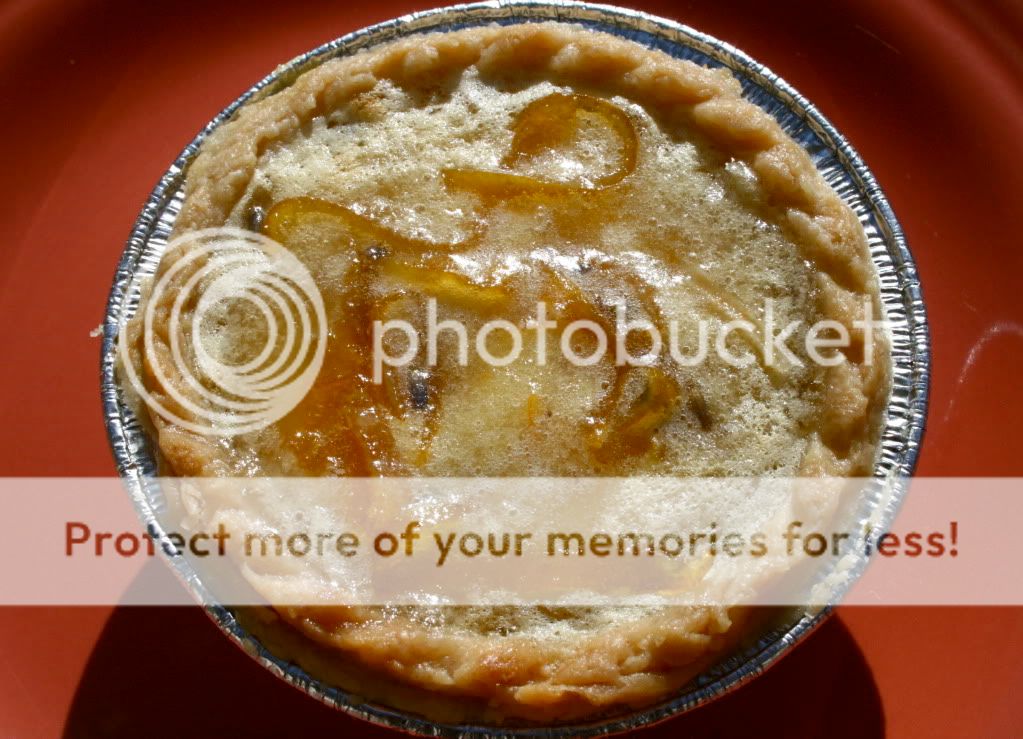
Separate lemon peels from sugar glaze and place around top of tart. Continue to boil remaining sugar glaze until it has thickened to a thick honey consistency.
Do NOT let it boil furiously as the sugar will re-crystalize and become gritty. Bubbles are not your friend.Spoon glaze on top of tart focusing in the middle. Let cool.
Also great as mini-tarts!


Subscribe to:
Posts (Atom)

Festival Food Done Right

